
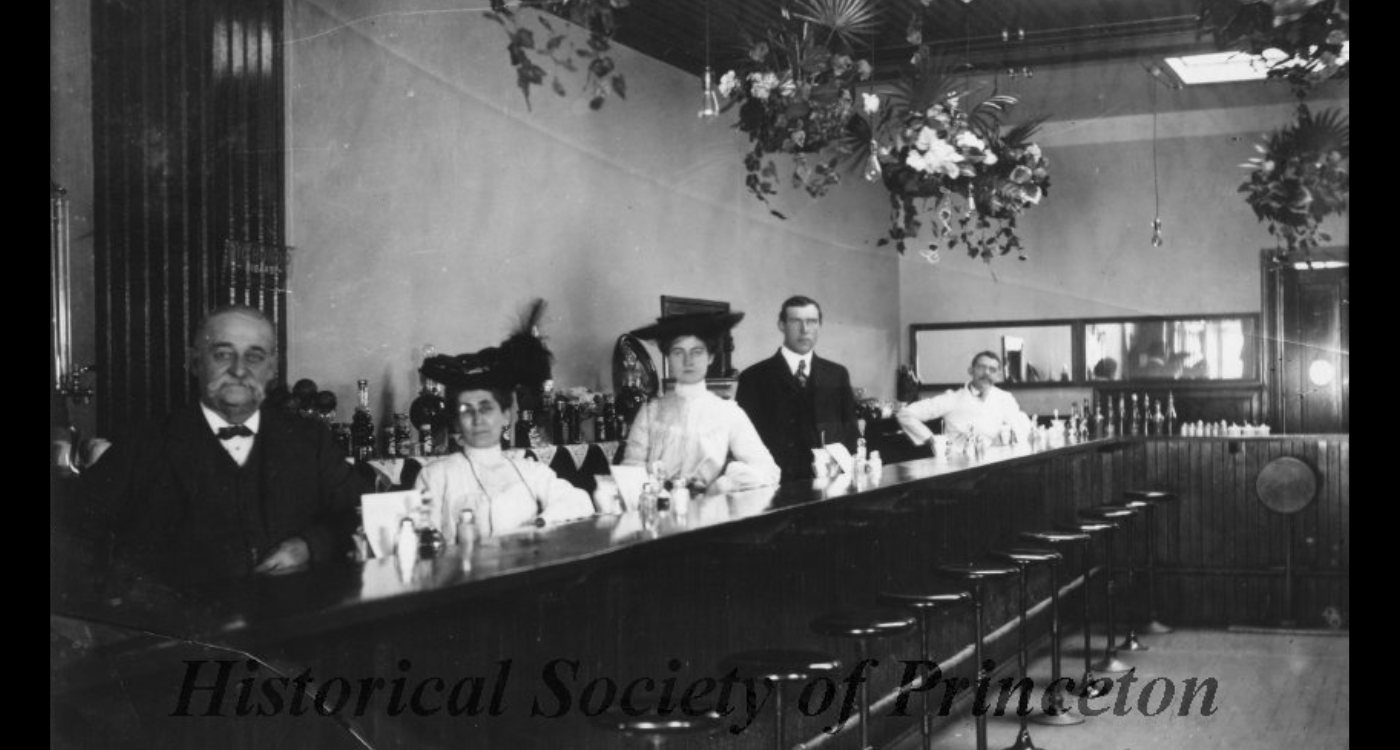
As one of the librarians who manages Princeton’s local history collection, I provide research assistance, curate the collection, and plan programs. One topic that consistently engages the community is the history of taverns. In addition to being places to unwind, these institutions long served as pivotal establishments for fostering political discourse and sharing information. Uncovering the stories of Princeton’s inns and taverns and sharing them with community members is always a treat. Two of my favorite places are Nassau Inn and Hudibras Tavern.
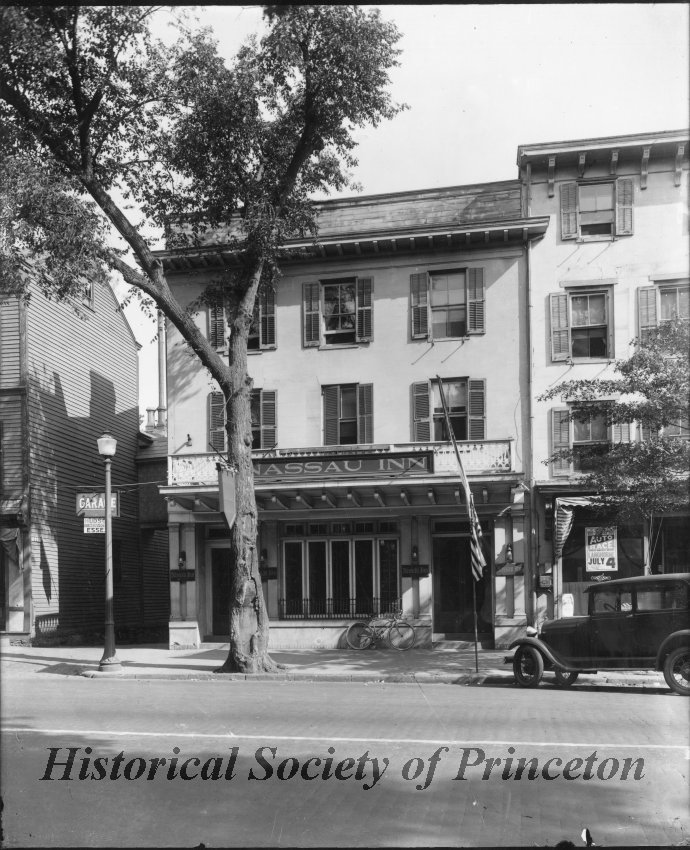
Nassau Inn was originally located at 52 Nassau Street, in the heart of Princeton, and it went through quite an evolution before it became a tavern. The west wing was built in 1757 and served as the private residence of Judge Thomas Leonard until 1769 when it became a hotel, The College Inn, and later, The Sign of the College. The east wing was built in 1846 by Charles Steadman and was a boarding house called The Mansion House. In the 1880s, the two buildings were combined to become Nassau Inn. Nassau Inn survived the Revolutionary War, and saw and fed many colonial figures. In 1783, many members of the Continental Congress stayed at Nassau Inn, and Congress even held a meeting there.
In 1937, the building was torn down for the development of Palmer Square. The Nassau Inn was perhaps the most historical building razed to open Nassau Street for Palmer Square, a project that was quite controversial. Where it pertained to Nassau Inn, defenders of the project insisted the structure was seriously dilapidated and little remained of the original 18th-century inn that stood on the site. Its famous sign was rescued and now proudly advertises the modern Nassau outside its eastern lobby entrance.
Another of Princeton’s historic watering holes was the Hudibras Tavern, formerly located where the Betsey Stockton Garden and the Firestone Library are today. Construction began in the 1750s by a businessman named George Campbell. Campbell purchased the sign for the tavern in 1761, and later put the tavern up for sale in 1765. In 1768, it was purchased by Lt. Col. Jacob Hyer. Under Hyer’s ownership, Hudibras was well known amongst travelers for its warm reception and entertainment. In 1774, on his way to Congress, John Adams, stopped in Princeton and made note of the tavern and Hyer in his diary.
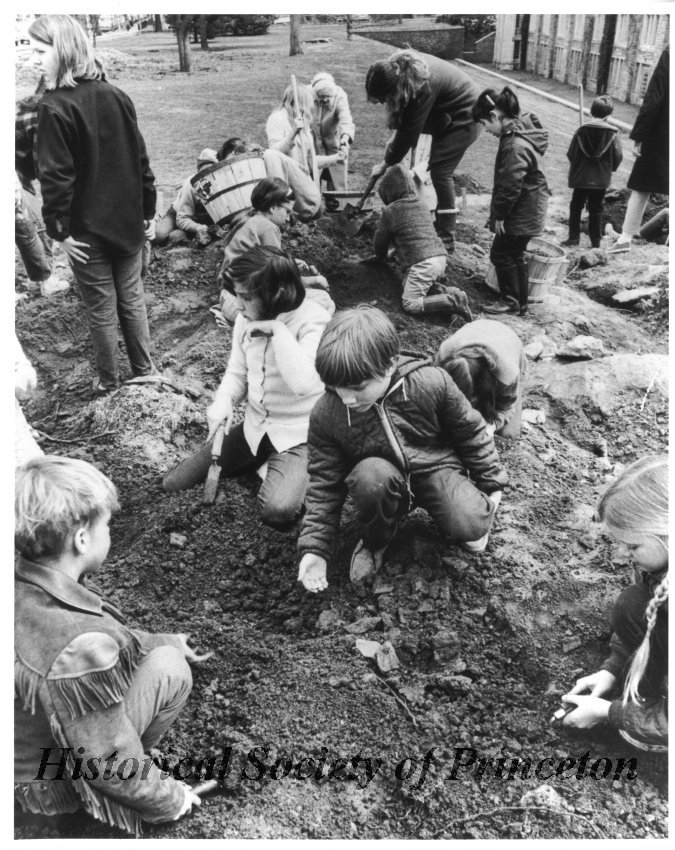
Hyer died in August of 1785 and, as a variety of new owners entered the fold, the tavern was renamed several times and eventually razed sometime in the late 1860s or early 1870s. During the construction of Firestone Library in 1969, the Historical Society of Princeton conducted an archaeological project known as the Hudibras Tavern Dig. Relics, including silverware and fragments of plates, pottery, and glass were recovered.
Tavern life is an aspect of Princeton history that many, myself included, are often drawn to. We all know about The Battle of Princeton, Nassau Hall and other famous landmarks, but taverns provide a glimpse into the community and the everyday life of some of Princeton’s earliest residents. Books about Princeton’s colonial history and taverns may be found in the library’s Princeton Room. The author talk for one of those books, Colonial Taverns of New Jersey: Libations, Liberty & Revolution by Michael C. Gabriele, may be viewed on our YouTube Channel.
In November, the library, in partnership with The Historical Society of Princeton (HSP) hosts Becky Diamond as she discusses her new book, “City Tavern: The Founding Table – Colonial Dining, Revolutionary History, and the Restaurant at the Center of it All.” Registration and further details can be found on our events calendar. Additionally, our friends at HSP are hosting Community on Tap on September 11, curator-led tours of the Dohm Alley exhibition “Princeton Taverns: On the Road to Revolution.”
And, as always, if you have any questions researching Princeton’s history, ask us. We’re here to help.
All photos courtesy of The Historical Society of Princeton.