
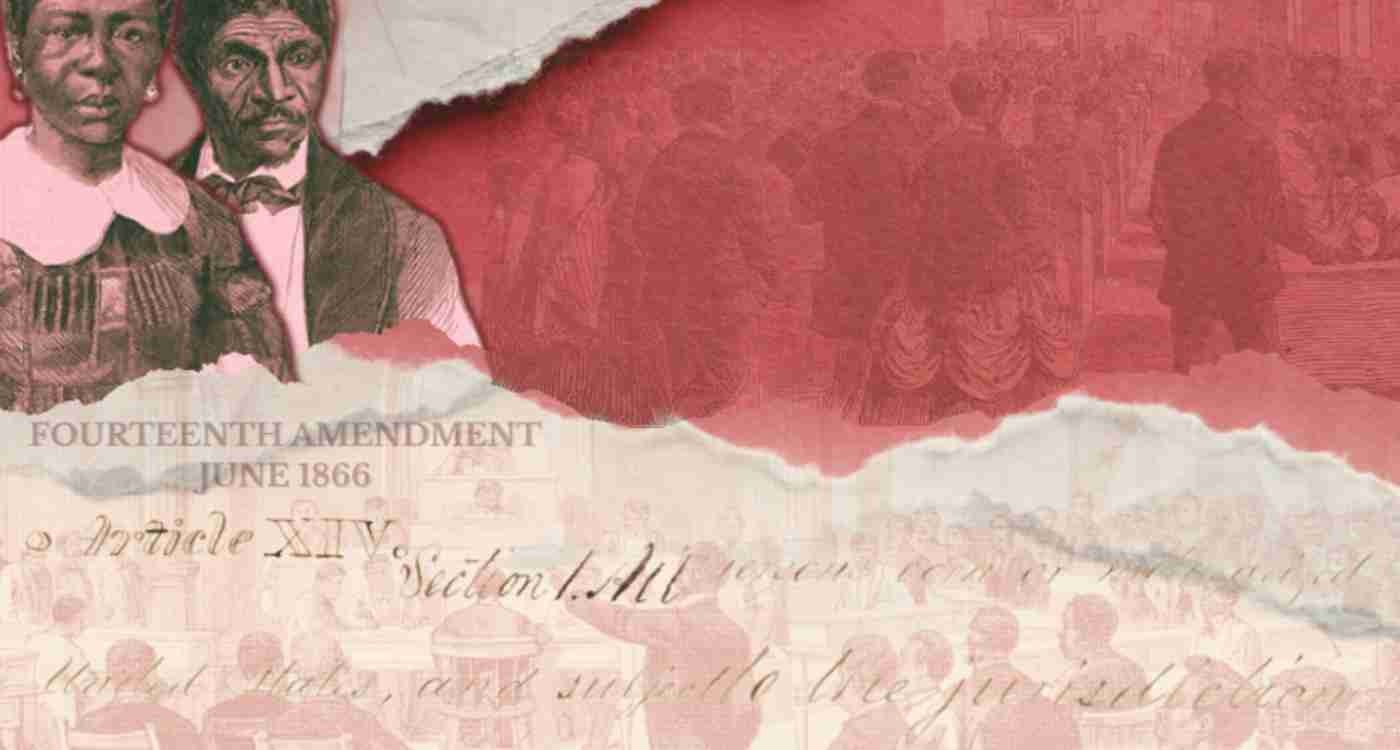
For the past seven years, our public humanities initiative, in association with the international coalition of organizations committed to this observance, has hosted a transcribe-a-thon and birthday celebration honoring the legacy of abolitionist, orator and writer Frederick Douglass. The core meaning of this recognition is well defined by Douglass Day’s main organizers as “a collective act of radical love for Black history.” The essential features remain the same: a YouTube livestream featuring training, speeches and updates on the progress of event; singing “Lift Every Voice and Sing” and “Happy Birthday to You,” cake-cuttings and a virtual bake off; and of course transcribing historic collections pertaining to Black history from digitized images, so that they become machine-readable. But apart from these stable features, the library’s history of involvement with this event has taken different shapes over the years, as we strive to make it a meaningful contribution to our celebration of Black History Month.
The history of Douglass Day as an observance extends back into the nineteenth century—in fact, it contributed to the establishment of Black History Month as an annual observance occurring in February. According to the Douglass Day website, the recognition of Douglass Day began around the time of Frederick Douglass’s death in 1895, when “a group led by Mary Church Terrell, (an important African American activist, educator, and author) observed Douglass’s birthday every February 14th as ‘Douglass Day.’ The observance “quickly became a school holiday across the country, a time to take children in DC and elsewhere out of school to hear Douglass’s words. These celebrations helped give rise to Black History Month, enriching the long tradition of African American rituals for remembering the past.”
The practices which the library has adopted to honor Douglass Day originated at the University of Delaware through efforts of the Colored Conventions Project, which first conceived the model of organizing an online transcribe-a-thon in 2017. Through Jim Casey‘s efforts, these activities were brought to Princeton University’s Center for Digital Humanities in 2019 and to the library and the Historical Society of Princeton in 2020, the first year in which the library held an in-person transcribe-a-thon dedicated to the papers of Anna Julia Cooper.
It wasn’t long, though, before the library had to adapt. In 2021, due to the pandemic, Douglass Day took place as a virtual event dedicated to transcribing the papers of Mary Church Terrell, a civil rights activist and the first president of the National Association of Colored Women. Princeton University offered two virtual events in association with the transcribe-a-thon: a student presentation of Abolition: Then and Now and What’s in a Name? A Discussion with Princeton University and Princeton Public School Students and Teachers, an event featuring Princeton University and Princeton Public School teachers and students reflecting on recent renamings of buildings in Princeton and on the Princeton University campus.
In 2024 the library joined up with the Stoutsburg Sourland African American Museum, so that each venue for transcription activities could cross-promote one another’s events, encouraging people to join up with the transcription activity at whichever location was more convenient for them. In 2025 through this same approach the library and its partners, the Digital Scholarship team and Special Collections at the Princeton University Library, the Center for Digital Humanities at Princeton University, and the Stoutsburg Sourland African American Museum, expanded their collaboration to include a virtual tour and a special collections showcase, in addition to the essential activities.
These opportunities for engagement beyond transcription and the birthday celebration suggested that a larger collaboration among regional libraries and schools could be achieved. So, for 2026 the partnership grew to include the library and its partners at Princeton University (including the new Commons Library), as well as the Stoutsburg Sourland African American Museum, the Hopewell Branch of the Mercer County Library, and the Pennington Public Library. By encouraging people to gather and transcribe wherever they happen to be, each library, museum or school engages its community in active citizenship around the promotion of Black history, while encouraging learning as a key activity of educational and information literacy organizations. What’s more—we have found that people even migrate among these spaces through the span of the day’s events, so that we realize a greater connection through a shared sense of purpose.
The occasion is a meaningful event in itself, but the learning and engagement which define the day can and should continue throughout the year. The library’s programming treats Black history and culture not only on Douglass Day, but also during Black History Month and throughout the year. Most notably, on Feb. 23 at 6 p.m., through a conversation with Reena Goldthree, Shatema Threadcraft presents her new book “The Labors of Resurrection,” which critically engages the hazards of Morrisonian democracy, “highlighting how the centrality of spectacular death has functioned to marginalize Black women in the stories of Black peoplehood and has ensured that they are not the main beneficiaries of large-scale Black political mobilization.” The library also curates resources which offer opportunities for further learning, such as our booklist for Douglass Day or our Black History and Culture: Resource Guide. Finally, as we often find ourselves explaining on Douglass Day, the transcription work itself need not occur only on the occasion itself; transcribers may carry on the work at any time when they happen to have access to an internet connection and a half hour or so to spare. Just navigate to the Zooniverse platform and click transcribe, and you can pick up the work wherever the large community of collaborators has left it.