
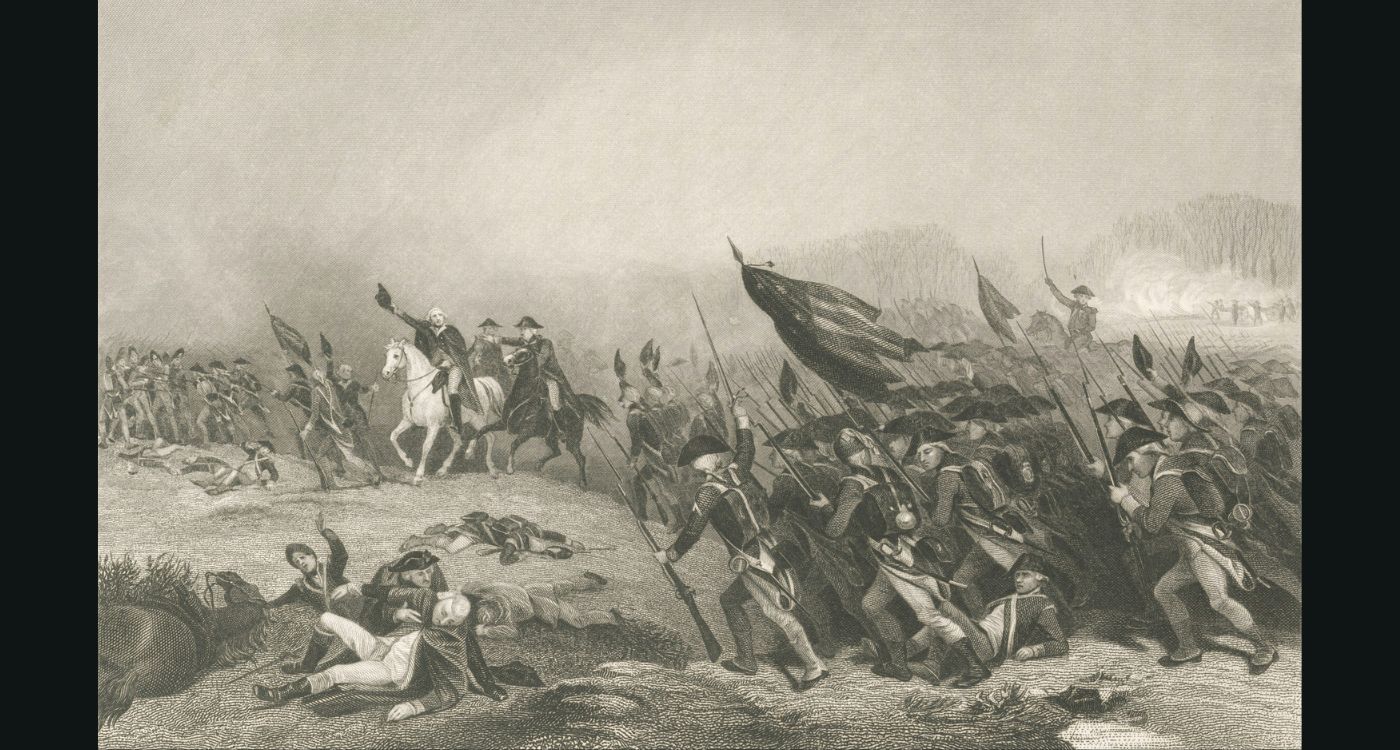
On July 4, 2026, the United States will commemorate the anniversary of the signing of the Declaration of Independence. While this celebration takes place every year, 2026 is particularly special as it is the semiquincentennial—250th—anniversary. Plans are taking shape across the country; here in Princeton we are honoring this milestone while reveling in the town’s contribution to America’s independence.
Princeton is steeped in revolutionary history. From Princeton Battlefield and its Mercer Oak to Morven Museum and Garden, the lore of the Ten Crucial Days and Continental Congress is all around us. This summer’s events are the culmination of the considerable, prolonged efforts of many local organizations, including the library, and comprise concerts, book talks, panel presentations, history walks, and more.
In its current exhibit, “Nursery of Rebellion,” Princeton University’s Firestone Library showcases items in the collection related to revolutionary Princeton. The exhibit includes books, documents, correspondence, and other artifacts that detail colonial resistance in Princeton. The title of the exhibition is derived from the 1783 correspondence of College of New Jersey (now Princeton University) professors who, when reminiscing about events, described Princeton as “a nursery of rebellion.” The exhibit brings to mind the Battle of Princeton and other prominent local events, but also the significant changes to the lives of Princetonians—everyday acts and events that have been lost to memory and history.
My favorite tale about the time concerns the University’s Nassau Hall. Completed in 1756, it was the largest stone structure in the colonies at the time. The building suffered greatly during the Revolutionary War: during the Battle of Princeton, it was occupied by both British and American troops at different times, changing hands at least three times in one day alone.
The story I love is not about battles, though. When the British Parliament passed the Tea Act in 1773, colonists in Boston dumped 340 chests of tea into the Boston Harbor to protest “taxation without representation.” Word spread across the colonies, and the College students decided to have a tea party of their own. They burst into the College storeroom and went room to room in Nassau Hall, taking all the tea they could find—tea that belonged to the College, other students, and faculty. They built a bonfire in front of Nassau Hall and burned the tea in protest, giving Princeton its very own tea party.
While the war took its toll on campus, it also had dramatic effects on the townspeople. Many people fled in panic as their homes and businesses were occupied and ransacked. During this time, Dr. Thomas Wiggins, a prominent local physician, lived in a house on what is now the site of the public library. The house was sacked by British troops in 1776 around the time of the Battle of Princeton. Damage claims filed after the war revealed that among the items stolen from the house were books from Dr. Wiggins’ library, making the British troops the first to owe overdue library fees.
There is so much to explore in Princeton’s vast history. Whether you are investigating its revolutionary history or are interested in more modern happenings, the library is the perfect place to start. Our Princeton and Local History Resource Guide will provide you with the tools you need to get started in your search. And, to learn more about the library’s programming around America at 250, visit our events calendar. Information about other happenings in our area can be found via Experience Princeton, The Humanities Initiative and RevolutionNJ.
Photo by The New York Public Library on Unsplash